Christmas Curios: How to Store Vintage Decorations Safely After the Season
Twelfth Night comes and goes, the tree goes out for recycling, and the decorations get swept into whatever box is nearest to hand. That is usually the moment when a 1930s glass bauble, a honeycomb paper bell or a length of wartime tinsel meets its end. It rarely happens dramatically. Most vintage decorations are lost to squash, damp, tape and a summer in a baking loft. Pack them with a bit of thought, though, and they will come out next December looking much as they did this year — which is the whole point of keeping them.
Sort First, Pack Second
Give yourself an hour at a table with decent light and work through the box item by item. Sort by material rather than by size: glass together, paper and card together, textiles together, early plastics and metal fittings separately. Materials age at different rates and need different protection, and a paper chain squashed under a box of baubles has no chance.
Photograph anything with an unusual hanger, a maker's mark or an original string loop before you touch it. Photographs help if a piece later needs repair, and they jog the memory about which bauble came from where. Keep original boxes and printed labels, even tatty ones — they are part of the object.
Do not wash anything. Dust painted surfaces with a clean, dry, soft brush, holding the piece over a sheet of tissue so that anything loose can be examined rather than hoovered away. A cotton glove on the other hand is a sensible habit, especially with silvered glass.
The Packing Kit Worth Having
None of this is expensive, and most of it lasts for years:
- Acid-free tissue paper for wrapping anything decorative
- Rigid boxes with lids, ideally shallow enough that you never stack more than two layers
- Plain cotton gloves for handling glass, metal and textiles
- Glassine or acid-free envelopes for loose hooks, beads and original strings
- Silica gel sachets to soak up stray moisture
- Soft pencil and labels, so next year's you knows what is inside
- Cotton tape or soft string rather than elastic bands
Newspaper, cling film and parcel tape are the three great enemies here. Newspaper ink transfers and the paper itself is acidic; cling film traps moisture and can lift paint; tape leaves a residue that is very hard to shift. Rubber bands perish and grip too tightly. Keep mothballs away from decorations altogether — the smell lingers in paper and textiles. If moths are a worry, use cedar blocks or a lavender bag instead.
Glass Baubles, Kugels and Silvered Glass
Painted and gilded glass
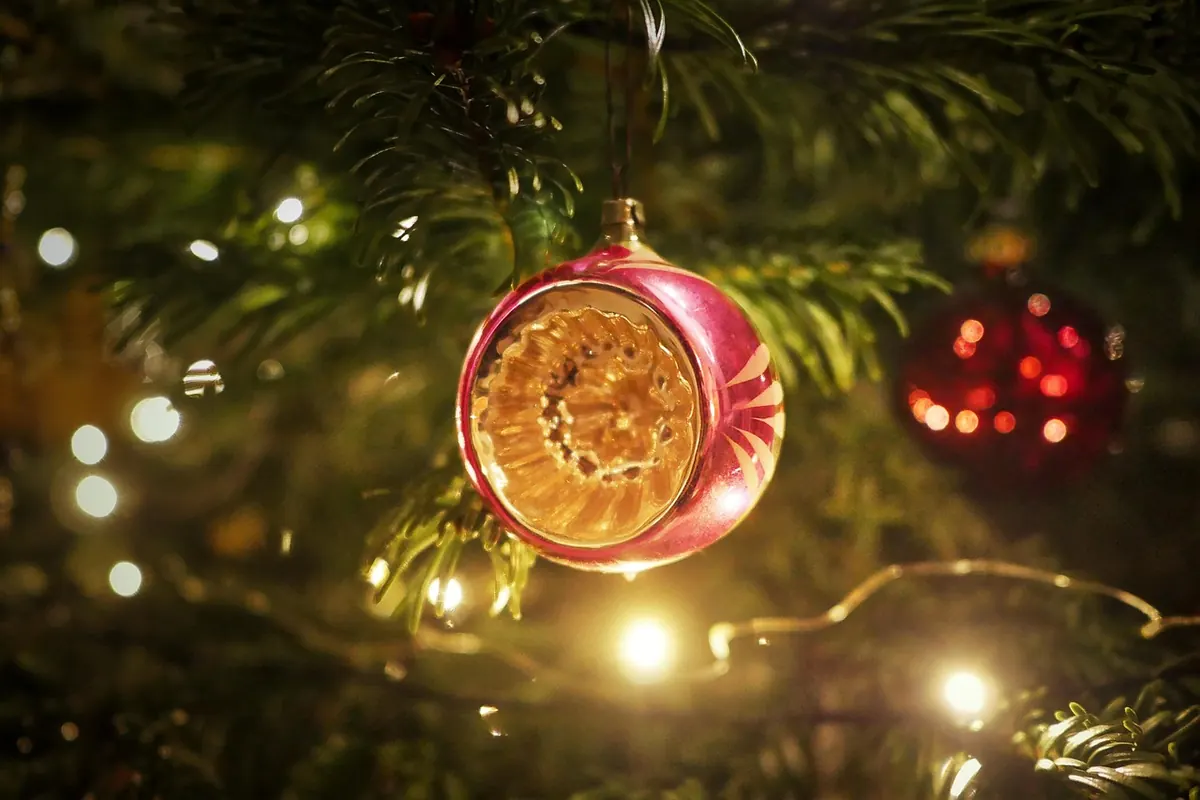
Wrap each bauble individually in acid-free tissue, then nest them in a rigid box with dividers, or with a layer of tissue between each row. The old egg-box trick works for sturdy modern baubles but is too abrasive for decorated glass. Never let two decorated surfaces touch: paint and gilding are the first things to rub away, and once the colour is gone there is nothing to be done about it. Replace corroded wire hangers, but tuck the originals into an envelope with a note rather than binning them.
Silvered and "mercury" glass
Silvered glass is delicate in a particular way: the silvering sits inside the glass and can cloud or flake if moisture gets in. Keep it dry, handle it in cotton gloves, and never immerse it. Dust with a dry brush only, and store it upright where it cannot roll into its neighbours.
Beaded and sequinned pieces
Old thread gives up quietly. Store beaded ornaments flat, in a shallow box, so the weight of the beads is not hanging on a decades-old knot. If a loop looks brittle, thread a new one alongside it rather than pulling the old one out.
Paper, Card and Honeycomb
Paper chains, honeycomb bells, cardboard Santas, lanterns and cracker crowns all share one weakness: moisture. Damp paper cockles, and once it has cockled it does not lie flat again.
Fold honeycomb decorations back along their original creases, gently, without forcing. Store them flat in a shallow box or an acid-free folder, with tissue between layers and nothing heavy on top. Paper chains are best wound loosely around a dry cardboard tube rather than bunched into a bag, where they will crease and tangle. Vintage cards, if you keep them, belong in an album or folder, not in a rubber-banded bundle in the loft.
Tinsel, Garlands and Textile Trims
Tinsel is more interesting than it looks. Some mid-century tinsel was made from lead foil, which is why it hangs so heavily and holds its shape so well. If you are not sure what yours is made of, treat it with care: handle it in gloves, keep it away from children and pets, wash your hands afterwards, and never shred or burn it. Ask your local household waste site how to dispose of it safely.
Paper-covered and cotton garlands should be rolled around a tube, not folded. Wool and cotton trims, felt figures and fabric stockings attract clothes moths, so store them clean — moths are drawn to food and perspiration residues — in cotton bags or a box with cedar or lavender, and inspect them each year. Wreaths keep their shape best in a round hat box; squashing one into a square box means a season of re-shaping in December.
Fairy Lights and Old Wiring
Lights are the one part of a vintage collection where safety matters more than sentiment. Old sets often have brittle flex, cracked plugs and no earth. Run your fingers along the whole length of the cable before you use them again; if it is perished, frayed or has been taped up, do not plug it in. Rewiring is a job for a qualified electrician, not a kitchen-table experiment. If you are unsure, treat an old set as a display piece and light the tree with a modern set instead.
Store lights coiled loosely around a cardboard reel or a piece of stout card, plug tucked in, the whole thing in a cloth bag or lidded box. Tight coils kink the copper inside, and damp ruins the fittings. Keep them out of the loft and the shed.
Where the Boxes Go
Storage conditions matter more than most people expect. Decorations want what you want: a stable temperature, moderate humidity, darkness and no damp. A cool, dry spare-room cupboard or the top of a wardrobe is ideal. A loft that bakes in July, a cellar that smells of damp, or a garage that swings from freezing to warm are all poor homes for glass, paper and textiles.
Stand boxes on a shelf or a pallet rather than directly on a concrete floor, and keep them out of direct sunlight. Refresh the silica gel sachets each year, and take five minutes to open every box before you decorate: check for new cracks, rust, mould or moth damage, and deal with any problem before it spreads. If a piece turns out to be genuinely valuable — a named maker, an early kugel, a documented family piece — speak to a conservator or a specialist auction house before attempting any repair yourself. A little care in January is what buys you another hundred Christmases.
Photo: fietzfotos / Pixabay